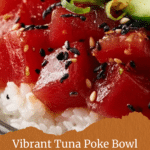
Tuna Poke Bowl Recipe
Introduction
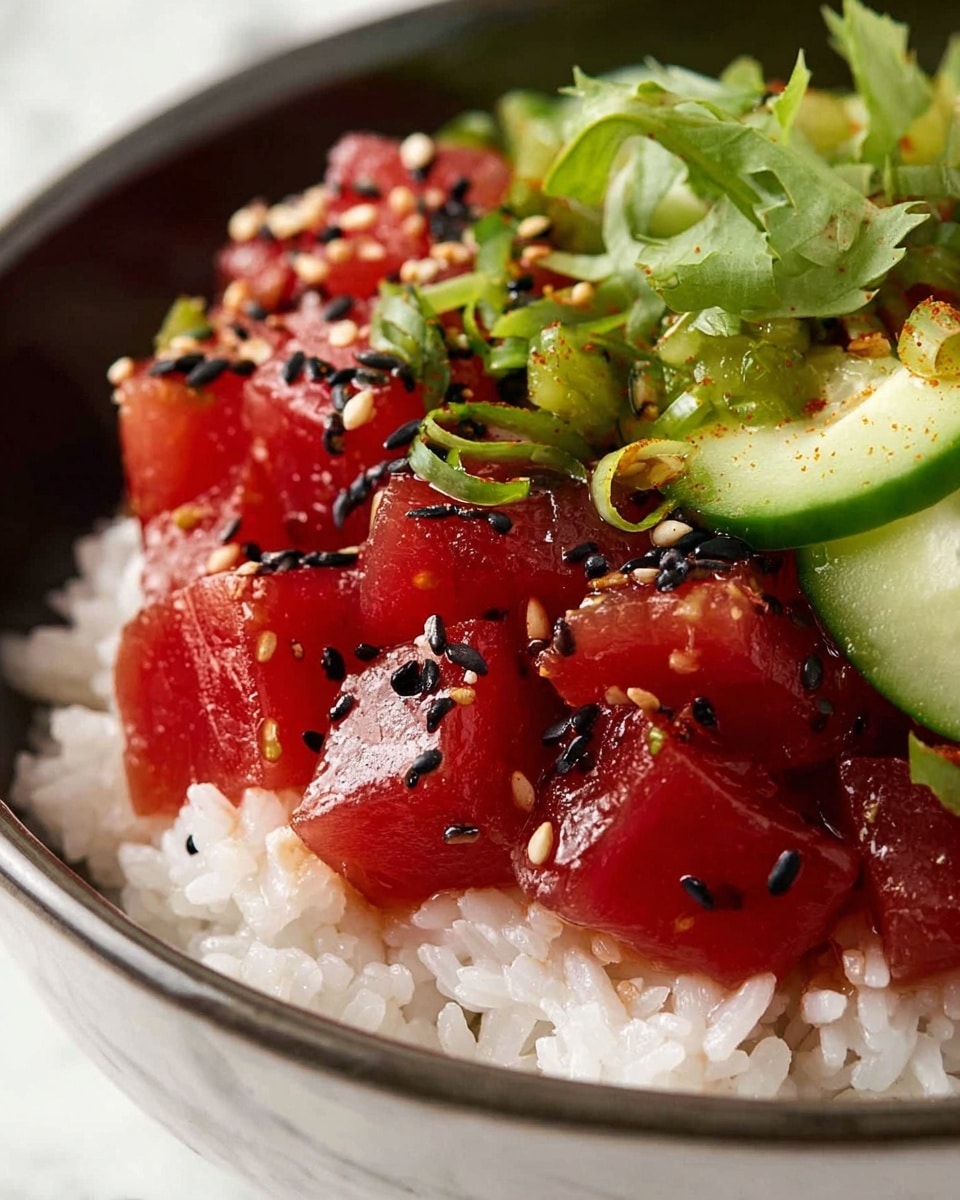
Tuna poke bowls are a fresh and flavorful meal inspired by Hawaiian cuisine. Combining tender sashimi-grade tuna with perfectly seasoned sushi rice and vibrant vegetables, this dish is both nutritious and satisfying. It’s quick to prepare and ideal for a light lunch or dinner.
Ingredients
- 2 cups sushi rice, rinsed
- 2 1/2 cups water
- 1/4 cup rice vinegar
- 2 tsp white sugar
- 1/4 tsp salt
- 1 1/2 tbsp light or all-purpose soy sauce
- 2 tsp dark soy sauce
- 2 1/2 tbsp toasted sesame oil
- 2 tbsp mirin
- 2 tbsp rice vinegar
- 2 1/2 tsp chili paste or Sriracha
- 1 1/2 tsp fresh grated ginger
- 350g (12oz) sashimi-grade tuna, diced into 1/4 inch (0.7cm) cubes
- 1 small carrot, finely julienned
- 1 cucumber, deseeded and finely diced
- 1 small avocado, peeled and cut into 8 wedges or diced
- 6 red radishes, thinly sliced
- 1 cup shelled edamame, boiled or steamed
- 1 green onion, thinly sliced on the diagonal
- Black sesame seeds, for garnish
Instructions
- Step 1: Place the rinsed sushi rice and water in a large saucepan over medium-high heat without a lid. When the water begins to boil, reduce the heat to medium-low, cover with a lid, and cook for 18 to 20 minutes until the water is fully absorbed. Do not stir or remove the lid during cooking.
- Step 2: Remove the saucepan from heat but keep the lid on. Let the rice sit undisturbed for 15 minutes to steam.
- Step 3: While the rice cooks, mix 1/4 cup rice vinegar, 2 teaspoons sugar, and 1/4 teaspoon salt in a bowl until the sugar dissolves to make the sushi rice seasoning.
- Step 4: Transfer the cooked rice to a large shallow pan or tray. Drizzle half of the sushi seasoning evenly over the rice.
- Step 5: Using a rice paddle or rubber spatula, gently cut and fold the seasoning through the rice for about one minute without mashing the grains.
- Step 6: Drizzle the remaining sushi seasoning on the rice and continue cutting and folding gently for another minute. The rice will appear wet but will absorb the seasoning as it cools.
- Step 7: Allow the rice to cool to warm or room temperature—placing it in front of a fan helps speed this process—about 20 minutes.
- Step 8: For the poke dressing, mix 1 1/2 tbsp light soy sauce, 2 tsp dark soy sauce, 2 1/2 tbsp toasted sesame oil, 2 tbsp mirin, 2 tbsp rice vinegar, 2 1/2 tsp chili paste or Sriracha, and 1 1/2 tsp fresh grated ginger in a bowl.
- Step 9: Divide the cooled sushi rice evenly among serving bowls.
- Step 10: Top the rice with radish slices, julienned carrot, cooked edamame, and avocado wedges.
- Step 11: Toss the diced tuna in the poke dressing until well coated. Transfer the dressed tuna immediately onto the rice in each bowl.
- Step 12: Sprinkle the diced cucumber mainly over the tuna, add the sliced green onion, and finish with a scattering of black sesame seeds.
- Step 13: Drizzle any remaining dressing over the bowls and serve immediately for the best flavor and texture.
Tips & Variations
- For a milder poke, reduce the amount of chili paste or substitute with a sweet chili sauce.
- Swap sashimi-grade tuna for salmon, trout, or kingfish according to preference.
- Add crunchy toppings like toasted seaweed strips or pickled ginger for extra texture.
- Use brown rice or cauliflower rice as a lighter alternative to traditional sushi rice.
Storage
If you have leftovers, store the poke components separately in airtight containers in the refrigerator. Sushi rice and vegetables keep well for up to 2 days, but sashimi-grade tuna should be consumed within 24 hours for freshness and safety. Reheat rice gently if desired, but serve the tuna cold without reheating to maintain texture.
How to Serve
Serve this delicious recipe with your favorite sides.
FAQs
Can I use regular tuna instead of sashimi-grade?
It’s best to use sashimi-grade tuna to ensure freshness and safety when eating raw fish. Regular tuna may carry a higher risk of bacteria and parasites and is not recommended for raw consumption.
How do I prepare the rice so it doesn’t become mushy?
Rinsing the sushi rice thoroughly before cooking removes excess starch, preventing stickiness. Avoid stirring the rice while it cooks, and let it steam with the lid on after cooking to allow the grains to firm up. Gently folding in the seasoning also helps maintain its texture.
PrintTuna Poke Bowl Recipe
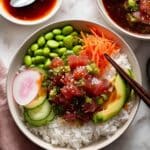
This Tuna Poke Bowl recipe features perfectly seasoned sushi rice topped with fresh sashimi-grade tuna, crisp vegetables, and a flavorful, spicy dressing. It’s a vibrant, healthy, and refreshing meal inspired by Hawaiian poke, ideal for a light lunch or dinner.
- Prep Time: 25 minutes
- Cook Time: 20 minutes
- Total Time: 45 minutes
- Yield: 4 servings 1x
- Category: Main Course
- Method: Stovetop
- Cuisine: Hawaiian
- Diet: Low Fat
Ingredients
Sushi Rice
- 2 cups sushi rice, rinsed
- 2 1/2 cups water
Sushi Rice Seasoning
- 1/4 cup rice vinegar
- 2 tsp white sugar
- 1/4 tsp salt
Dressing
- 1 1/2 tbsp light or all-purpose soy sauce
- 2 tsp dark soy sauce
- 2 1/2 tbsp toasted sesame oil
- 2 tbsp mirin
- 2 tbsp rice vinegar
- 2 1/2 tsp chili paste or Sriracha
- 1 1/2 tsp freshly grated ginger
Bowl Toppings
- 350g / 12oz sashimi-grade tuna, diced into 0.7cm (1/4″) cubes
- 1 small carrot, finely julienned
- 1 cucumber, deseeded and finely diced
- 1 small avocado, peeled and cut into 8 wedges or diced
- 6 red radishes, finely sliced
- 1 cup shelled edamame, boiled or steamed
- 1 green onion, finely sliced on the diagonal
- Black sesame seeds for garnish
Instructions
- Cook Sushi Rice: Place the rinsed sushi rice and water in a large saucepan over medium-high heat without a lid. Once the water comes to a boil, reduce the heat to medium-low, cover with a lid, and cook for 18-20 minutes until the water is fully absorbed. Do not stir or remove the lid during cooking.
- Rest Rice: Remove the saucepan from heat, keeping the lid on, and let the rice rest undisturbed for 15 minutes to finish steaming.
- Make Sushi Rice Seasoning: In a small bowl, mix rice vinegar, sugar, and salt until the sugar dissolves completely.
- Season Rice: Spread the cooked rice in a large pan (approximately 23 x 33cm / 9 x 13 inches). Drizzle half of the sushi rice seasoning evenly over the rice. Using a rice paddle or rubber spatula, gently cut and fold the rice to evenly incorporate the seasoning without mashing the grains.
- Finish Seasoning: After about a minute of folding, drizzle the remaining seasoning over the rice and continue folding gently for another minute. The rice will look wet but will absorb the flavors as it cools.
- Cool Rice: Allow the rice to cool to warm or room temperature, approximately 20 minutes. For best results, place the rice in front of a fan to cool faster.
- Prepare Dressing: In a separate bowl, combine the light and dark soy sauces, toasted sesame oil, mirin, rice vinegar, chili paste or Sriracha, and grated ginger. Mix well.
- Assemble Poke Bowls: Divide the cooled sushi rice evenly between serving bowls. Arrange the radish slices, julienned carrot, shelled edamame, and avocado on top of the rice.
- Dress Tuna and Add to Bowls: Toss the diced tuna briefly in the prepared dressing—no need to marinate—and immediately add it on top of the rice and vegetables in each bowl.
- Garnish and Serve: Sprinkle the diced cucumber mainly over the tuna, then add the sliced green onion and black sesame seeds. Drizzle any remaining dressing over the bowls and serve immediately.
Notes
- For best sushi rice texture, rinse the rice until water runs clear before cooking.
- Using sashimi-grade fish ensures safety and optimal flavor for this raw preparation.
- The dressing can be adjusted for spice by varying the amount of chili paste or Sriracha.
- Optional: Serve with pickled ginger or wasabi for extra zing.
- This recipe can be made with salmon, trout, or kingfish as alternatives to tuna.
- Keep the rice covered during cooking and resting steps to ensure proper texture and moisture retention.
- Chilling the diced vegetables before assembling helps keep the bowl fresh and crisp.
Keywords: Tuna Poke Bowl, Sushi Rice, Hawaiian Poke, Sashimi Tuna, Healthy Bowl, Japanese Inspired, Raw Tuna Salad